
SS-31: Cardiolipin, Mitochondrial Membranes, and Key Findings
Research Area: Mitochondrial & Cellular Energy Research
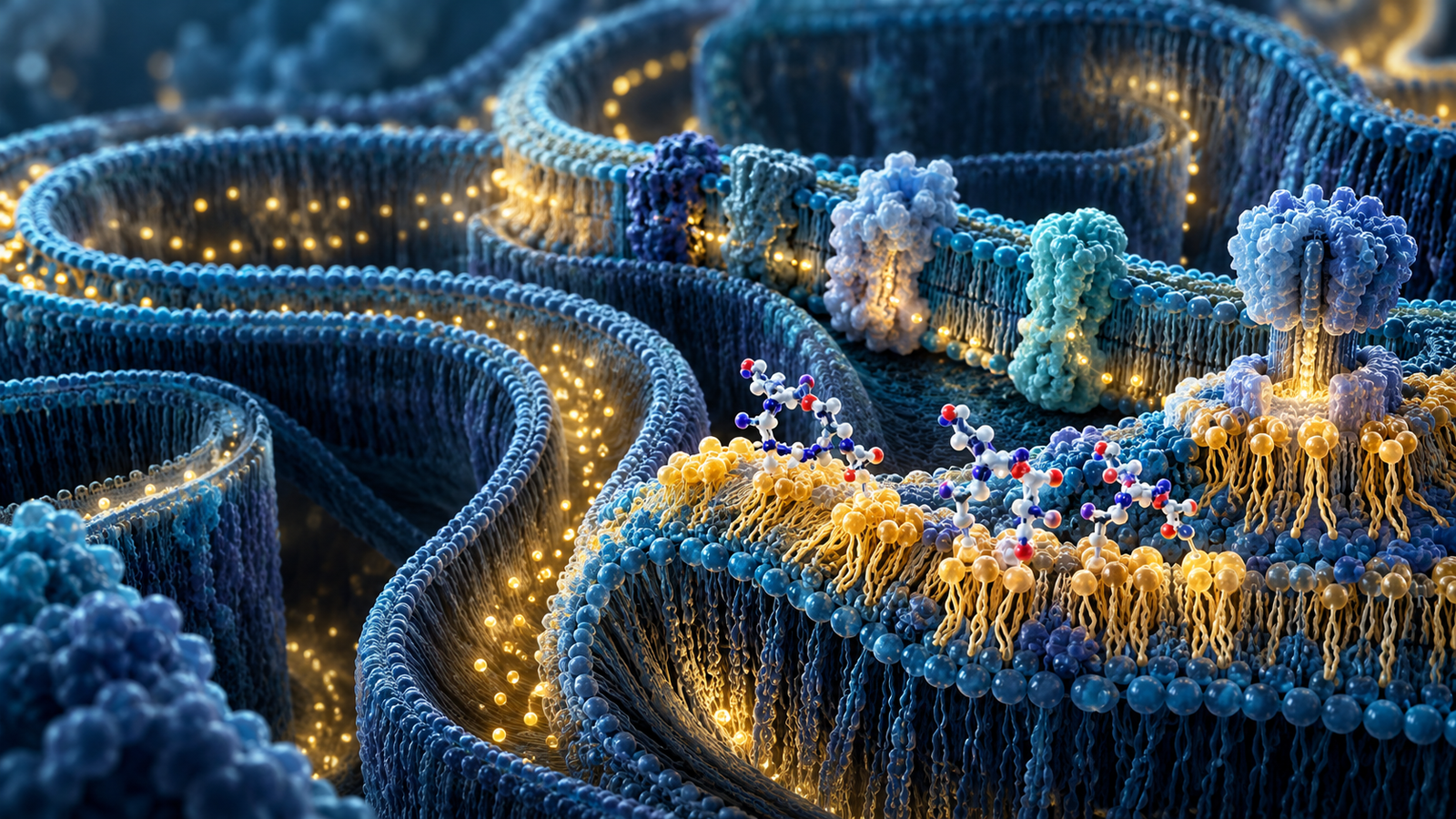
SS-31 is a short peptide studied for the way it interacts with the inner mitochondrial membrane—the folded surface where most mitochondrial ATP production takes place. It is also known in published research as elamipretide. Unlike compounds that supply fuel or activate a metabolic receptor, SS-31 gives researchers a way to examine how the physical organization of the mitochondrial membrane affects energy production and cellular stress.
The key molecule in this research is cardiolipin, a specialized fat-like molecule found mainly in the inner mitochondrial membrane. Cardiolipin helps shape the membrane’s folds and organize the protein machinery that moves electrons and produces usable cellular energy.
Why the inner mitochondrial membrane matters
The inner mitochondrial membrane is folded into structures called cristae. These folds increase the available surface area and create an organized setting for the electron transport chain. The electron transport chain is a series of protein complexes that pass electrons from one complex to the next.
As electrons move, protons are pumped across the membrane. This creates an electrical and chemical gradient. ATP synthase—an enzyme that works like a molecular turbine—uses that gradient to make ATP. If membrane structure, protein organization, or the gradient changes, ATP production and reactive oxygen signaling can change with it.
What is cardiolipin?
Cardiolipin is a phospholipid, meaning a fat-like molecule that helps form biological membranes. Its unusual shape supports the tight curves of mitochondrial cristae. It also interacts with proteins involved in electron transport, energy conversion, and the controlled removal of severely damaged cells.
Cardiolipin can be altered by oxidative stress. Those changes may affect the shape of the inner membrane and the way respiratory proteins assemble. Because SS-31 concentrates near the inner mitochondrial membrane and interacts with cardiolipin, it is used to study whether membrane organization can be supported during energy or oxidative stress.
The proposed SS-31 mechanism
1. SS-31 reaches the inner mitochondrial membrane
SS-31 has chemical properties that allow it to associate with mitochondrial membranes without depending on the large electrical charge that drives some other mitochondria-targeting molecules.
2. It interacts with cardiolipin
The interaction includes both electrical attraction and contact with the water-repelling portions of the membrane. This positions SS-31 near cardiolipin-rich areas where electron-transport proteins are organized.
3. Membrane organization can change
Research has connected the SS-31–cardiolipin interaction with cristae structure, membrane electrical properties, and the assembly of proteins involved in mitochondrial respiration. Respiration is the oxygen-dependent process that supports ATP production.
4. Energy and stress measurements may respond
Changes in membrane organization can influence electron movement, oxygen use, ATP production, and the formation of reactive oxygen species. These outcomes should be measured separately because improvement in one does not guarantee the same change in all of them.
Key findings in SS-31 research
- Cardiolipin binding: SS-31 has been shown to associate with cardiolipin through electrical and water-repelling interactions.
- Cristae organization: Research has connected SS-31 with the shape and organization of inner-membrane folds that hold the energy-producing machinery.
- Electron transport: Findings have examined whether cardiolipin interactions help preserve the organization and efficiency of respiratory-chain proteins.
- ATP production: SS-31 research often measures whether changes at the membrane are accompanied by changes in cellular-energy output.
- Reactive oxygen signaling: Studies have examined the relationship among electron leakage, reactive molecules, membrane damage, and mitochondrial function.
- Membrane electrical properties: More recent work has explored how SS-31 may alter surface electrostatics—the distribution of electrical charge along the membrane.
SS-31 compared with other cellular-energy compounds
| Compound | Main target or role | What the comparison can separate |
|---|---|---|
| SS-31 | Cardiolipin and inner-membrane organization | Membrane structure and respiratory efficiency |
| MOTS-C | Mitochondrial-to-nuclear signaling | Stress communication and adaptive gene activity |
| NAD+ | Electron transfer and enzyme support | Availability of a central energy-transfer coenzyme |
| L-Carnitine | Fatty-acid transport | Movement of long-chain fats into mitochondria |
| L-Glutathione | Redox protection | Management of reactive molecules inside mitochondria |
SS-31 and glutathione can both appear in oxidative-stress research, but they begin at different points. SS-31 centers on cardiolipin and the organization of the inner membrane. Glutathione participates in the enzyme systems that process reactive molecules. Keeping that difference clear helps prevent a broad “antioxidant” label from hiding the mechanism being tested.
What researchers measure
- Oxygen consumption as an indicator of mitochondrial respiration
- ATP production as a measure of usable cellular-energy output
- Mitochondrial membrane potential, the electrical difference needed for normal energy production
- Cristae shape and inner-membrane organization
- Assembly and activity of electron-transport proteins
- Reactive oxygen species and oxidative changes to cardiolipin
No single measurement proves that the whole mitochondrial system improved. For example, lower reactive oxygen levels could reflect better electron control, but they could also reflect lower respiratory activity. Pairing oxygen use, ATP output, membrane potential, and structural measurements provides a more useful picture.
Common questions
Is SS-31 a fuel for mitochondria?
No. SS-31 does not supply glucose, fatty acids, or electrons. It is studied for how its interaction with the inner mitochondrial membrane may affect the machinery that processes those inputs.
Is cardiolipin found throughout the cell?
Cardiolipin is strongly concentrated in the inner mitochondrial membrane. That location is one reason it is closely connected with mitochondrial structure and energy production.
Does SS-31 work the same way as MOTS-C?
No. SS-31 is studied at the membrane level through cardiolipin. MOTS-C is studied as a signal that can move from mitochondria toward the nucleus and influence adaptive pathways.
Why measure both structure and function?
A membrane can look more organized without producing more ATP, and a temporary functional change may occur before visible structural changes appear. Measuring both helps connect the proposed mechanism with the result.
Explore SS-31 and cellular-energy research
See the Mitochondrial & Cellular Energy Research area for the broader relationship among mitochondrial membranes, signaling, fuel transport, electron transfer, and redox balance.
View the CellTek Labs SS-31 research product.
Continue exploring mitochondrial research
- MOTS-C: Mitochondrial Signaling, Cellular Energy, and Key Findings
- MOTS-C vs. SS-31: Mitochondrial Signaling and Membrane Research Compared
References
- SS-31, cardiolipin, and mitochondrial bioenergetics
- Cardiolipin-targeting compounds and mitochondrial plasticity
- SS-31 interaction with mitochondrial membranes and surface charge
- Cardiolipin structure and mitochondrial bioenergetics
- Targeting mitochondrial dysfunction with elamipretide
Research and educational content only. CellTek products are not for human or veterinary use.
