
MOTS-C vs. SS-31: Mitochondrial Signaling and Membrane Research Compared
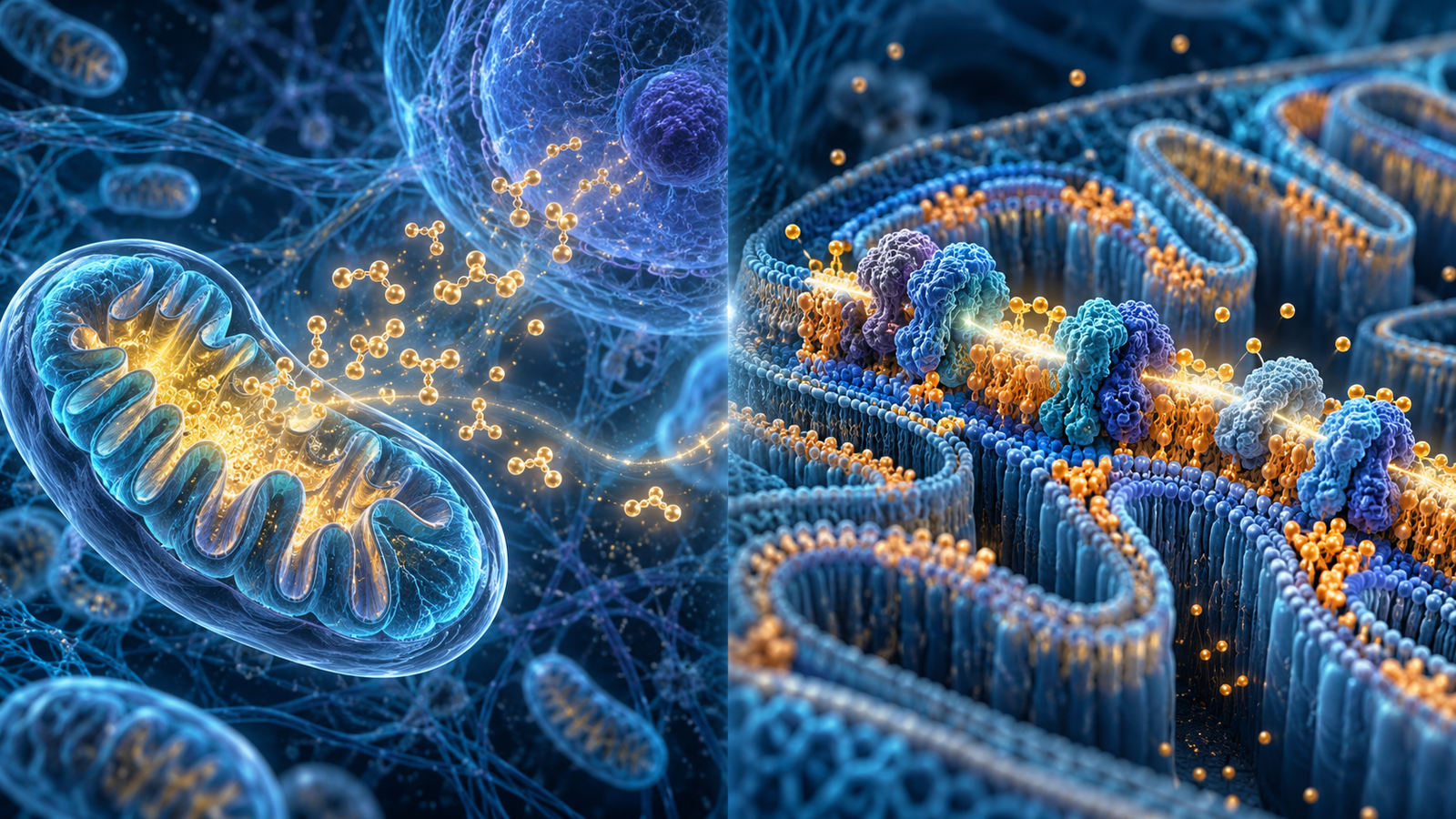
Research Area: Mitochondrial & Cellular Energy Research
MOTS-C and SS-31 are both studied in connection with mitochondria, but they answer very different questions. MOTS-C is a signaling peptide encoded by mitochondrial DNA. SS-31 is a membrane-targeting peptide studied for its interaction with cardiolipin, a specialized molecule in the inner mitochondrial membrane.
The shortest way to separate them is this: MOTS-C is mainly about mitochondrial communication and adaptation; SS-31 is mainly about mitochondrial membrane organization and energy machinery. This comparison explains why that difference matters and which measurements help distinguish the two mechanisms.
The two research questions
MOTS-C: What message is the mitochondrion sending?
MOTS-C is studied as a stress-responsive signal. Research connects it with AMPK, an enzyme that helps cells sense low-energy conditions, and with movement of the peptide into the nucleus. The nucleus controls the activity of most cellular genes, so this pathway may help coordinate a broader response to metabolic or oxidative stress.
SS-31: How well is the mitochondrial membrane organized?
SS-31 is studied at the inner mitochondrial membrane. Its interaction with cardiolipin has been connected with the shape of cristae—the folds that hold the electron-transport machinery—and with the organization of proteins that support oxygen use and ATP production.
Side-by-side comparison
| Feature | MOTS-C | SS-31 |
|---|---|---|
| Primary research role | Mitochondrial signaling peptide | Mitochondrial membrane-targeting peptide |
| Main starting point | Energy stress and mitochondrial-to-nuclear communication | Cardiolipin and inner-membrane organization |
| Central pathway | AMPK and adaptive gene activity | Cristae structure and respiratory-chain organization |
| Common measurements | AMPK activity, nuclear movement, gene activity, glucose use | Oxygen use, membrane potential, ATP output, cristae shape |
| Best simple question | How does the cell respond to an energy-status message? | How does membrane organization affect energy production? |
Where the pathways connect
Communication and membrane function are separate, but they are not isolated. A change in electron transport can alter ATP supply and reactive oxygen signaling. Those changes can activate energy-sensing pathways such as AMPK. In the other direction, a stress-response program can change which metabolic enzymes and protective proteins the cell produces.
This means MOTS-C and SS-31 can be studied around some of the same outcomes while still testing different mechanisms. If both are associated with a change in ATP, for example, the next question is whether the change began with membrane organization, adaptive signaling, or a combination of the two.
How to choose the comparison
- Choose MOTS-C-focused measurements when the main question concerns AMPK, glucose handling, movement into the nucleus, adaptive gene activity, or stress communication.
- Choose SS-31-focused measurements when the main question concerns cardiolipin, cristae structure, membrane potential, electron transport, oxygen use, or ATP-producing machinery.
- Compare both when the goal is to separate signaling changes from membrane-centered changes while keeping the measured outcome consistent.
The most informative design does not ask only whether an outcome changed. It measures an early step that is specific to the proposed mechanism and then connects that step with later functional outcomes.
A practical measurement map
| If the outcome is… | Add a MOTS-C-specific measure | Add an SS-31-specific measure |
|---|---|---|
| ATP production | AMPK activity or adaptive gene response | Membrane potential or cristae organization |
| Glucose use | Glucose transport and energy-sensing pathways | Oxygen consumption and respiratory efficiency |
| Oxidative stress | Antioxidant-response gene activity | Cardiolipin oxidation and electron leakage |
| Cell survival after stress | Nuclear stress-response signals | Inner-membrane integrity and respiratory function |
Common questions
Are MOTS-C and SS-31 interchangeable?
No. They are connected to the same organelle but start at different parts of the system. Treating them as substitutes would hide the difference between signaling and membrane organization.
Which compound is more directly connected with ATP production?
SS-31 begins closer to the physical machinery that supports ATP production. MOTS-C may influence energy use through signaling and adaptation, but it is not part of the electron-transport chain itself.
Which compound is more directly connected with gene activity?
MOTS-C. Its movement toward the nucleus and connection with stress-response pathways make gene activity a central part of the research question.
Can both pathways affect oxidative stress?
Yes, through different routes. SS-31 research examines membrane and electron-transport conditions that influence reactive-molecule production. MOTS-C research examines adaptive signals and gene programs involved in managing stress.
Explore the individual articles
- MOTS-C: Mitochondrial Signaling, Cellular Energy, and Key Findings
- SS-31: Cardiolipin, Mitochondrial Membranes, and Key Findings
- Mitochondrial & Cellular Energy Research
Related CellTek research products
References
- MOTS-C and mitochondrial-to-nuclear signaling
- MOTS-C in stress, metabolism, and aging
- SS-31, cardiolipin, and mitochondrial bioenergetics
- SS-31 interactions with mitochondrial membranes
Research and educational content only. CellTek products are not for human or veterinary use.
