
GLP-1 (C): Amylin Signaling, Metabolic Research, and Key Findings
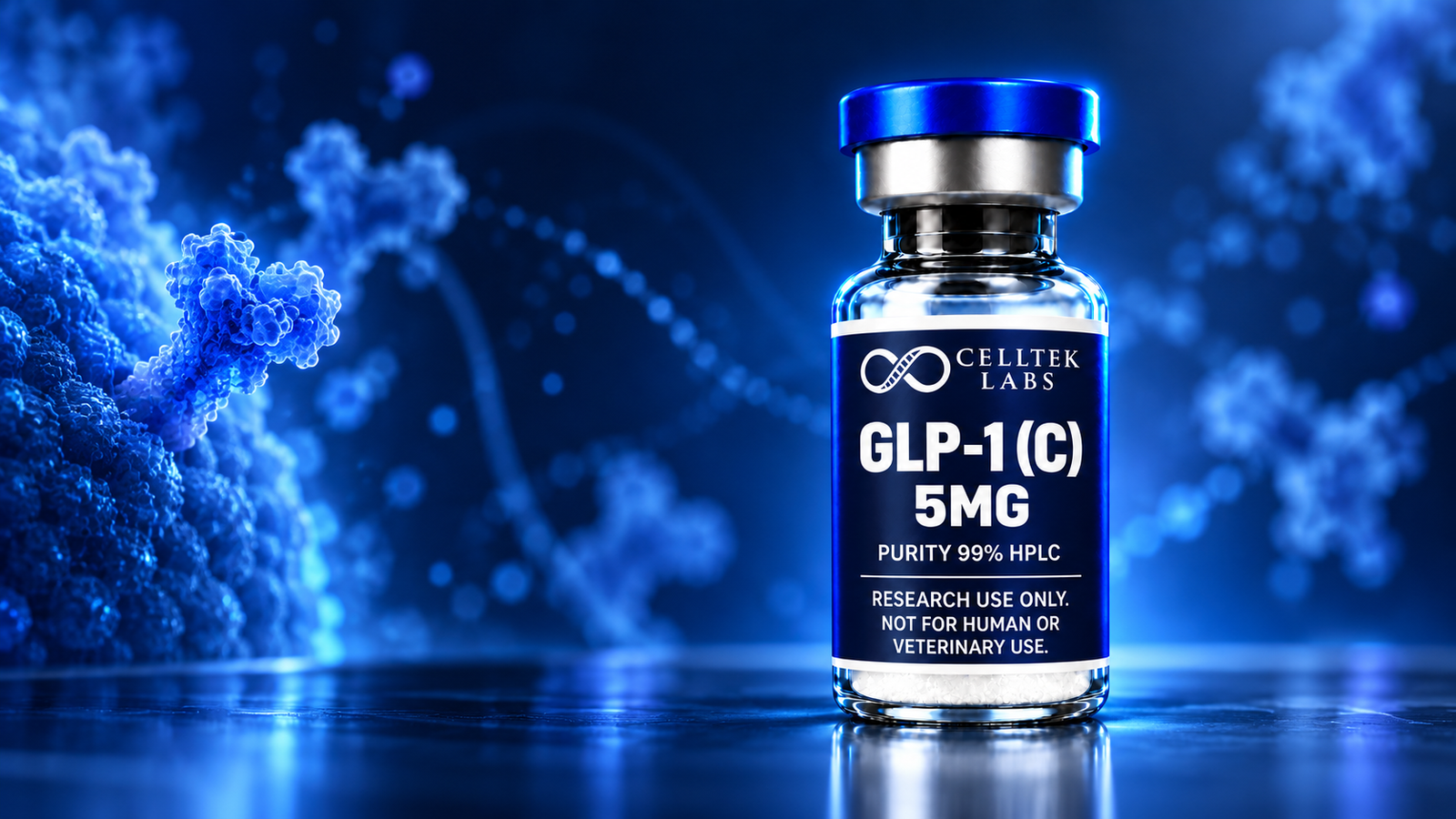
Research Area: Metabolic Signaling Research
GLP-1 (C) is a long-acting analog connected with amylin signaling. Amylin is a hormone released alongside insulin after nutrients arrive. It helps coordinate fullness, stomach emptying, and the rise in glucagon after a meal. Although amylin and GLP-1 influence some of the same outcomes, they use different receptors and begin different signaling pathways.
This distinction makes GLP-1 (C) useful for comparing two meal-related systems. Researchers can examine amylin signaling on its own, compare it with GLP-1 receptor activity, or investigate what happens when the two pathways are activated together.
What is amylin?
Amylin is made by the same pancreatic beta cells that produce insulin. Beta cells are the cells responsible for sensing glucose and releasing insulin. When a meal raises nutrient levels, insulin and amylin are normally released together, but the two hormones have different jobs.
Insulin helps move and store nutrients. Amylin helps manage the pace of the meal response. Its signaling contributes to fullness, slows the movement of food out of the stomach, and influences glucagon, a hormone that helps make stored fuel available.
How amylin receptors work
Amylin receptors are built from more than one protein. A calcitonin receptor forms the central part, while an additional receptor-activity-modifying protein changes how the receptor recognizes signals. That modular design helps explain why amylin-related compounds can produce different signaling patterns even when they belong to the same family.
GLP-1 (C) is designed to remain available longer than natural amylin. The extended duration allows researchers to study sustained receptor activity and compare it with the shorter signal produced around a meal.
The main signaling questions
- Fullness: How does amylin-receptor activity change the signals associated with ending a meal?
- Digestive pacing: How does the pathway influence the speed at which stomach contents move onward?
- Glucagon after nutrients arrive: How does amylin signaling affect a hormone that makes stored fuel available?
- Receptor balance: Which amylin-receptor combinations contribute most strongly to the measured response?
- Combination signaling: What happens when amylin and GLP-1 pathways are activated together?
Key research findings
Published research on long-acting amylin analogs has reported changes in appetite-related outcomes and body weight. The work supports amylin as a distinct metabolic pathway rather than a weaker version of GLP-1 signaling.
Structural research has also shown how the compound interacts with amylin and calcitonin receptor systems. These findings help explain why receptor makeup matters: the same compound may not activate every amylin-receptor combination with identical strength.
Combination research has examined long-acting amylin signaling alongside sustained GLP-1 receptor activity. Reported findings suggest that the pathways can contribute complementary effects because they begin at different receptors even when some measured outcomes overlap.
Amylin and GLP-1 are related, but not interchangeable
| Feature | Amylin pathway | GLP-1 pathway |
|---|---|---|
| Released with | Insulin from pancreatic beta cells | Nutrients reaching the digestive system |
| Primary receptor system | Amylin receptor combinations | GLP-1 receptor |
| Shared research interests | Fullness, digestive pacing, glucagon regulation | Fullness, digestive pacing, insulin and glucagon signaling |
| Distinct emphasis | Meal pacing and amylin-receptor biology | Nutrient-responsive insulin signaling and the gut–brain network |
Where GLP-1 (C) fits in the CellTek series
GLP-1 (S) provides the single GLP-1 receptor comparison. GLP-2 (T) combines GIP and GLP-1 receptor activity. GLP-3 (R) adds glucagon-receptor activity to that dual pattern. GLP-1 (C) sits beside those compounds rather than directly inside the same sequence because its main target is the amylin-receptor system.
That difference is scientifically useful. A comparison between GLP-1 (C) and GLP-1 (S) asks how two separate meal-related pathways reach overlapping outcomes. A combination design asks whether those separate signals interact, reinforce one another, or remain independent.
Questions this compound can help investigate
- How does sustained amylin-receptor activity affect meal-related signaling?
- Which responses overlap with GLP-1 activity, and which remain distinct?
- How does receptor composition change the strength or duration of signaling?
- What does amylin activity contribute when paired with a GLP-1 receptor analog?
- How do digestive pacing and appetite-related signals change over time?
Common questions
Is GLP-1 (C) a GLP-1 receptor compound?
No. The CellTek code places it within the same metabolic research group, but its main research pathway is amylin-receptor signaling.
Why compare amylin with GLP-1?
Both participate in the response to a meal and influence some of the same measurements, but they begin at different receptors. That makes the comparison useful for separating shared outcomes from pathway-specific mechanisms.
Does similar outcome mean identical mechanism?
No. Two pathways can change the same measurement through different intermediate steps. Receptor activity, downstream signaling, timing, and tissue response all help reveal the mechanism.
Continue exploring metabolic signaling
Return to the Metabolic Signaling Research overview, or continue with a related article:
- GLP-1 (S): receptor signaling and key findings
- GLP-2 (T): dual GIP and GLP-1 receptor research
- GLP-3 (R): triple-receptor metabolic signaling
- Single, dual, triple, and amylin signaling compared
References
- Development of a long-acting amylin analog
- Long-acting amylin analog research and metabolic outcomes
- Combined amylin and GLP-1 receptor signaling
- Metabolic findings from combined amylin and GLP-1 signaling
- Structural activation of amylin and calcitonin receptors
View the GLP-1 (C) research product
Research and educational content only. CellTek products are not for human or veterinary use.
